Sharing Urological Care & Management: New guidance from families and people with spina bifida
Jointly developed by the International Federation for Spina Bifida and Hydrocephalus (IFSBH) and ERN eUROGEN, the guidance is rooted in the contributions and experiences shared through IFSBH’s national member associations, people with lived experience and families. It brings these perspectives together with clinical expertise from healthcare professionals to support informed, coordinated and person-centred urological care. The guidance is endorsed by ERN ITHACA, the European Association of Urology (EAU) and the European Society for Paediatric Urology (ESPU).
The publication explores the urological care journey across the lifespan, bringing together clinical knowledge and the experiences of people with spina bifida and their families. It provides a practical overview of the issues, decisions and support needs that can arise at different stages of life. It is primarily intended for people with spina bifida and their families, but is also relevant to healthcare professionals, patient organisations and policymakers.
Urological care throughout life
Bladder dysfunction is common among people with spina bifida and can have important implications for urinary tract and kidney health. Early assessment, appropriate bladder management and regular monitoring can help prevent complications and support long-term health.
However, urological care involves much more than medical management. It can affect daily routines, independence, relationships, education, employment and social participation. Support needs also change as people grow, develop new skills and take greater responsibility for their own care.
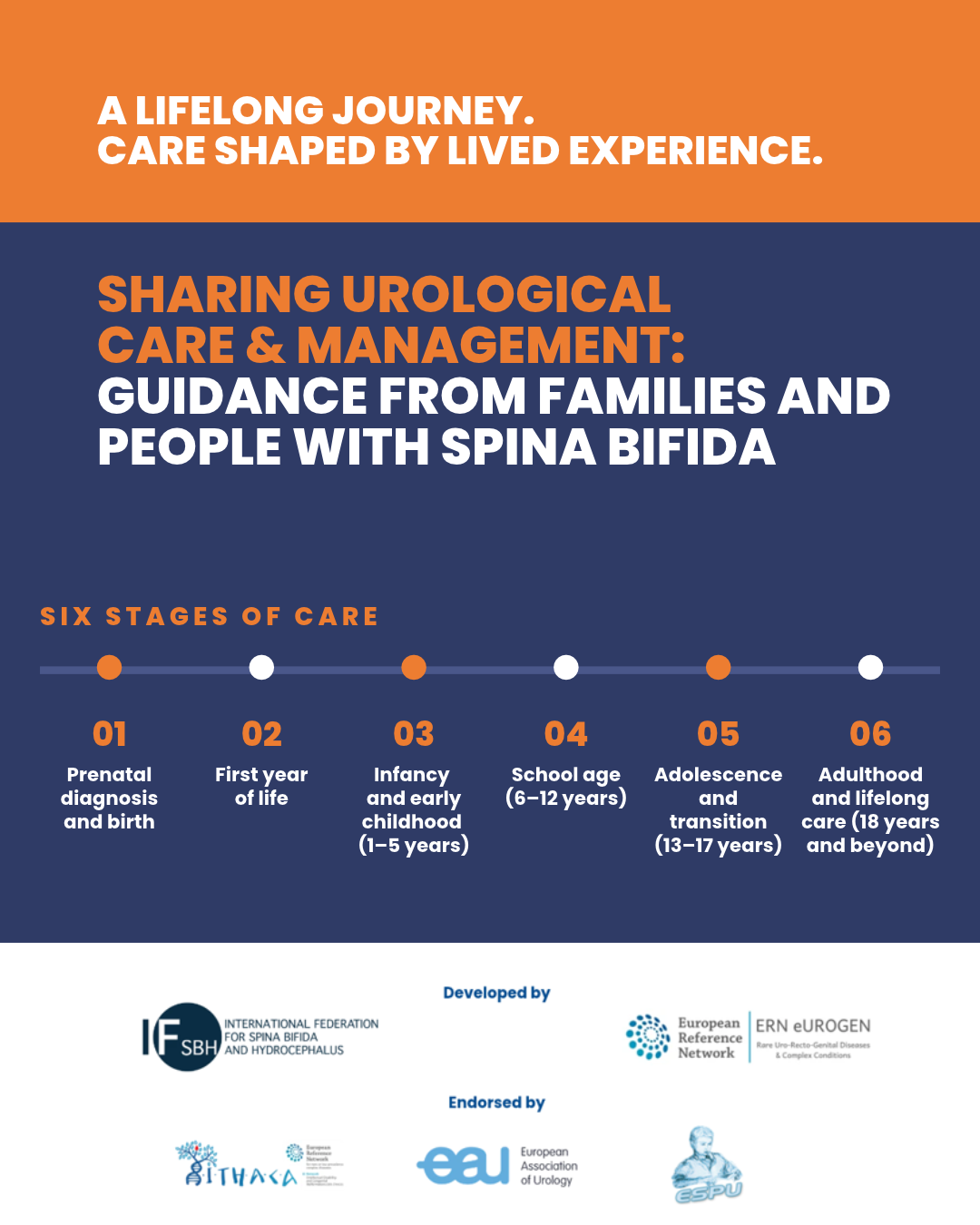
The guidance follows six stages of the patient journey:
- Prenatal diagnosis and birth: supporting families with balanced information, informed decision-making and coordinated care from the beginning.
- First year of life: establishing appropriate follow-up, protecting kidney and bladder health, and helping families develop confidence in daily care.
- Infancy and early childhood (1–5 years): adapting care routines as children grow and supporting development, participation and increasing independence.
- School age (6–12 years): strengthening self-management skills while supporting inclusion, social participation and continuity of care.
- Adolescence and transition (13–17 years): supporting growing autonomy, age-appropriate communication and a structured transition to adult healthcare services.
- Adulthood and lifelong care (18 years and beyond): maintaining health and access to specialist care while supporting independence, relationships, education, employment and participation in society.
Bringing lived experience into guidance
An important part of this guidance is the contribution of people with spina bifida and families. Through IFSBH’s member associations and wider network, experiences and perspectives from different countries helped bring the patient and family perspective into the development process.
These contributions illustrate the realities behind clinical recommendations: learning daily care routines, navigating healthcare systems, managing changes in health needs, making decisions and preparing for greater independence.
The contributions also underline the importance of clear and accessible information, respectful communication and involving people with spina bifida and families in decisions about care.
The guidance recognises that every person’s experience of spina bifida is different. Support should therefore respond to individual needs, preferences and circumstances rather than assume that one approach will suit everyone.
A European collaboration
IFSBH developed the guidance in collaboration with ERN eUROGEN – the European Reference Network for Rare Uro-Recto-Genital Diseases and Complex Conditions.
Through its national member associations, IFSBH brought together perspectives and experiences from people with spina bifida and families in different countries. The development also involved multidisciplinary healthcare professionals, clinicians from European Reference Networks, members of the EAU/ESPU Paediatric Urology Guidelines Panel and the IFSBH Advisory Groups.
The guidance is endorsed by:
- ERN ITHACA – European Reference Network for Rare Congenital Malformations and Rare Intellectual Disability
- European Association of Urology (EAU)
- European Society for Paediatric Urology (ESPU)
Inspired by the patient journey methodology used by European Reference Networks, the guidance combines clinical expertise, existing evidence and lived experience to provide a person-centred overview of care across the lifespan, with a particular focus on bladder and kidney health.
Supporting informed and coordinated care
Access to appropriate and coordinated urological care differs across countries and healthcare systems. People with spina bifida and families may face challenges navigating healthcare services, finding specialised expertise and ensuring regular follow-up and support.
By bringing together practical information, clinical knowledge, and lived experience, this guidance aims to help people with spina bifida, families, healthcare professionals, and patient organisations better understand the urological care journey and the importance of continuity throughout life.
Above all, it highlights the importance of listening to people with spina bifida and families, providing accessible information and involving people with lived experience in decisions about care.
IFSBH and ERN eUROGEN warmly thank all member associations, partners, people with lived experience and healthcare professionals who contributed to this process. The guidance reflects the value of sharing knowledge, experiences and expertise, and working together across the international SBH community and European healthcare networks.
Read the publication
Sharing Urological Care & Management: Guidance from Families and People with Spina Bifida is available on our Patient Information page, under Paediatrics: Rare Congenital Uro-Recto-Genital Anomalies (Workstream 1) > Spina bifida.
Reference: International Federation for Spina Bifida and Hydrocephalus & ERN eUROGEN (2026). Sharing urological care & management: Guidance from families and people with spina bifida. https://eurogen-ern.eu/for-patients/patient-information/