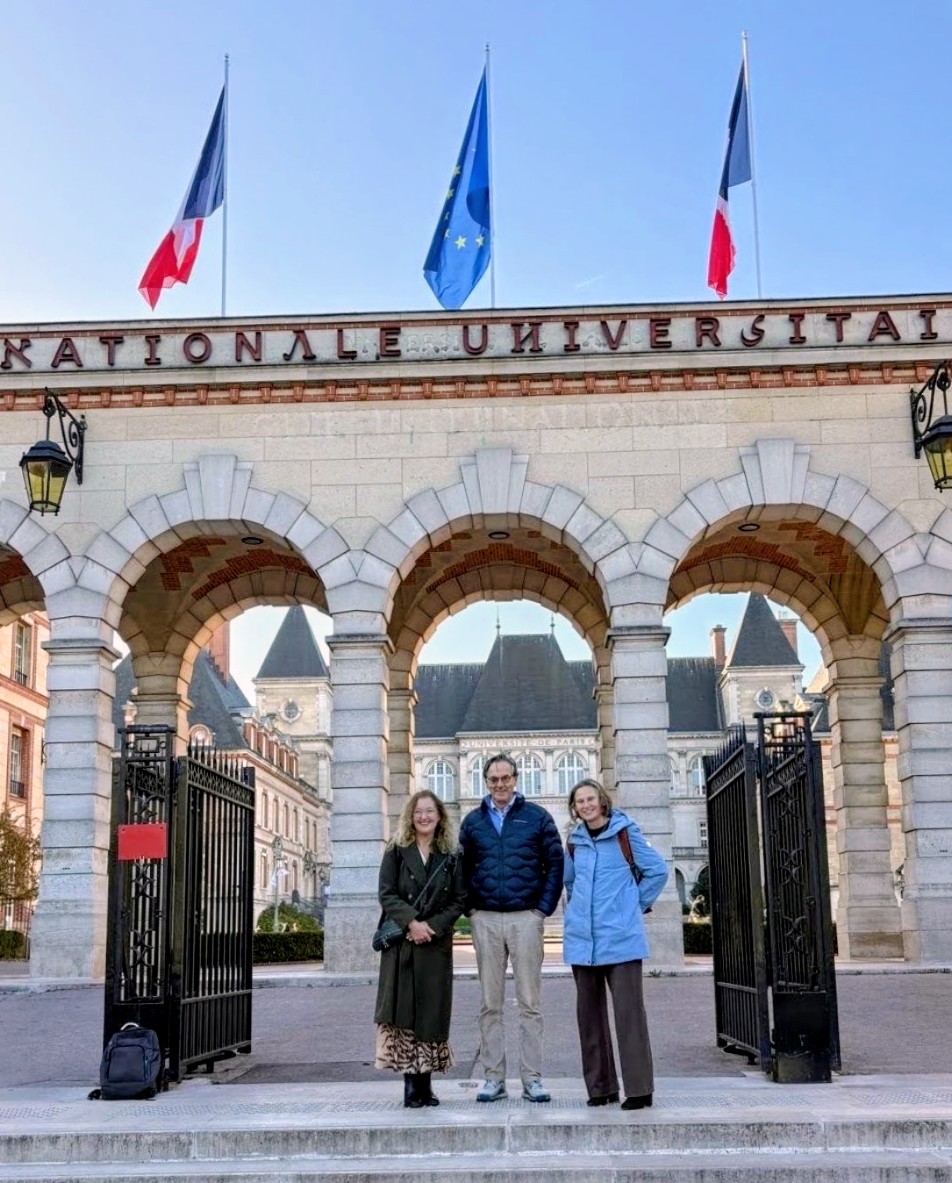
Michelle Battye (ERN eUROGEN Programme Manager), Prof. Peter Mulders (ERN eUROGEN Coordinator) and Prof. Marjolijn Ligtenberg (ERN GENTURIS Coordinator) at the OD4RD3 meeting in Paris.
On Friday 13 November 2026, ERN eUROGEN Coordinator Prof. Peter Mulders and Programme Manager Michelle Battye attended the Orphanet Data 4 Rare Diseases 3 (OD4RD3) meeting at the Collège Franco-Britannique of the Cité Universitaire in Paris. Prof. Mulders took part as a member of the project’s ERN Board, made up of ERN Coordinators who advise OD4RD3 on its activities and action plans.
Rare diseases without an ERN
Orphanet has recently been leading work to identify rare diseases with ORPHAcodes that do not yet fall within the scope of any European Reference Network. ERN eUROGEN has agreed to take on some of these codes in the future, including codes relating to male infertility and rare gynaecological tumours, as they are closest to ERN eUROGEN’s work. All patients with a rare disease should be able to find an ERN that can help them.
Classifying rare bladder inflammatory diseases
Orphanet also agreed to work with ERN eUROGEN on revising the classification of rare bladder inflammatory diseases. This work will be planned into the Network’s next grant period, 2027–2029.
About the OD4RD3 meeting and project
Orphanet has coordinated the OD4RD projects since 2022. They aim to strengthen Orphanet’s collaboration with the ERNs and ensure the ORPHAcodes meet the needs of the people who code diagnoses. They also support a network of 24 Orphanet National Nomenclature Hubs, which help hospitals hosting ERN centres to put the ORPHAcodes into use. The OD4RD3 meeting brought together National Hub representatives, the ERNs, HaDEA and other stakeholders to review the project’s progress and agree priorities for its next phase.
To find out more, visit the OD4RD website. Clinicians who would like advice on a patient with a rare uro-recto-genital condition can refer a case through our CPMS (Clinical Patient Management System).