 On Rare Disease Day 2026 (28 February), the European Commission’s Directorate-General for Health and Food Safety (DG SANTE) released a comprehensive communications package highlighting the work of the European Reference Networks (ERNs) and the EU’s ongoing commitment to patients living with rare diseases. The package is available via the DG SANTE Rare Diseases and European Reference Networks website.
ERN eUROGEN is proud to feature in this package, which showcases the breadth and depth of the ERN programme across Europe.
What’s in the Package?
The 2026 communications package brings together five key publications, each addressing a different audience and aspect of the EU’s work on rare diseases.
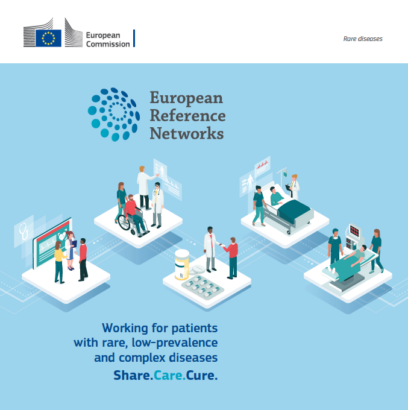
1. ERN Brochure 2026 – European Reference Networks – Working for Patients with Rare, Low-Prevalence and Complex Diseases (2026 edition) | English
This updated brochure provides a comprehensive overview of all 24 ERNs, which are now fully operational across 375 hospitals and 1,606 specialised centres in 27 EU Member States and Norway. It presents the ERN model under the shared ethos of Share. Care. Cure. and demonstrates how cross-border clinical collaboration is transforming outcomes for patients with rare, low-prevalence, and complex diseases.
2. ERN eUROGEN Individual Factsheet 2026 – ERN eUROGEN – Working for Patients with Rare Uro-Recto-Genital Diseases and Complex Conditions | English
This factsheet, dedicated to ERN eUROGEN, sets out the network’s scope, achievements, and ongoing activities. It highlights how ERN eUROGEN addresses rare uro-recto-genital diseases and complex conditions across the life course — from congenital anomalies in childhood through to adult functional, reconstructive, and rare urogenital tumour conditions.
3. ERN Success Story Booklet – 2025 edition – European Reference Networks: A Success Story for Patients Living with a Rare Disease | English, Deutsch, ελληνικά, français, italiano – soon available in all EU languages
This booklet illustrates the real-world difference the ERNs have made for patients since their establishment in 2017, bringing to life the human impact of the ERN model through patient stories and network achievements.
4. Factsheet for Patients and Families – EU Delivering on Rare Diseases for Patients and Families (2026) | English, Deutsch, ελληνικά, français, italiano – soon available in all EU languages
This factsheet explains the EU’s action on rare diseases in accessible terms for patients and their families. Key figures include:
- Between 27 and 36 million people in the EU live with a rare disease
- Between 6,000 and 8,000 distinct rare diseases are estimated to exist in the EU
- Around 80% of rare diseases are of genetic origin, and 70% start in childhood
- Since 2017, the ERNs have received EU funding, and recently a direct grant of more than EUR 77 million covering activities for 2023–2027
- Whilst one rare disease may affect only a handful of patients, another may touch as many as 245,000 people
5. Factsheet for Policymakers and Professionals – How the European Commission Works on Rare Diseases and the European Reference Networks (ERNs) (2026) | Available in all EU languages
This factsheet explains the legislative and policy framework underpinning the EU’s work on rare diseases, including the Commission Communication on Rare Diseases, the Council Recommendation in the field of rare diseases, and the Cross-Border Healthcare Directive. It describes how multiple Commission Directorate-Generals coordinate their expertise to advance EU activities on rare diseases in a multidisciplinary and collaborative manner.
Why This Matters for ERN eUROGEN
The publication of this package on Rare Disease Day is a significant moment for the ERN programme and for ERN eUROGEN in particular. Inclusion in the DG SANTE communications materials reflects the network’s achievements and the continued EU commitment to improving outcomes for people living with rare uro-recto-genital diseases.
We encourage all members, partners, and stakeholders to share these resources widely — with colleagues, patients, and the public — to raise awareness of the ERNs and the vital work being done across Europe.