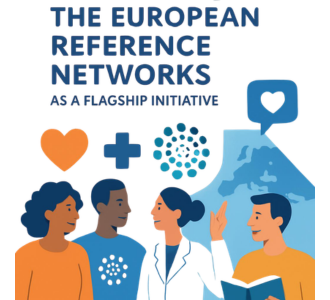
 A comprehensive review published in the Orphanet Journal of Rare Diseases documents the evolution and impact of the European Reference Networks (ERNs) since their establishment in 2017. The paper, titled “European Reference Networks – a flagship activity of the EU in the field of rare and complex diseases: from 2017 to 2025,” brings together insights from across all 24 networks, and includes ERN eUROGEN Coordinator Peter Mulders as a co-author.
Why This Matters for Rare Uro-Recto-Genital Diseases
Rare diseases collectively affect an estimated 27–36 million people across the European Union. For patients with rare uro-recto-genital conditions, access to specialist expertise has historically meant lengthy diagnostic journeys and limited treatment options. This publication demonstrates how ERN eUROGEN and its 23 peer networks are transforming care by enabling cross-border collaboration without requiring patients to travel.
Today, the ERNs connect more than 1,600 expert centres across 375 hospitals in EU Member States and Norway. ERN eUROGEN is among these networks, uniting leading uro-recto-genital specialists to harmonise diagnosis and treatment across Europe.
Key Achievements Documented
The article highlights several areas where ERNs—including ERN eUROGEN—have made measurable progress:
- Clinical collaboration and patient care. Over 4,900 extremely rare or difficult cases have been discussed among experts through the Clinical Patient Management System (CPMS), enabling specialists to share expertise and medical images securely without requiring patients to travel internationally.
- Clinical guidelines and standardisation. Since 2020, the ERNs have endorsed or developed more than 530 guidelines and recommendations tailored to specific rare diseases. ERN eUROGEN has developed guidelines on anorectal malformations and spinal dysraphisms, and is developing further guidelines on rare and complex uro-recto-genital conditions.
- Education and training. Between 2020 and 2024, the ERNs organised more than 1,030 educational webinars and over 540 face-to-face activities, including workshops and seminars. These initiatives reach healthcare professionals across Europe and help address gaps in training for low-prevalence conditions.
- Patient engagement. All 24 ERNs work with European Patient Advocacy Groups (ePAGs) to ensure patient perspectives shape governance and service delivery. ERN eUROGEN’s ePAG has collaborated on patient-journey mapping, educational materials, and guideline development.
- Data and research infrastructure. ERN registries enable the collection of interoperable patient data, supporting clinical research and the identification of cohorts large enough to advance understanding of rare conditions.
Resilience in Crisis
The publication also documents how ERNs demonstrated resilience during the COVID-19 pandemic and Russia’s war of aggression against Ukraine. ERN eUROGEN has contributed to these coordinated responses, including supporting Ukrainian patients through dedicated resources and specialist consultations.
Looking Forward: Integration into National Healthcare Systems
The paper identifies a critical next step for the ERN ecosystem: integration into national healthcare systems. The Joint Action JARDIN (2024–2027), a three-year initiative with a budget of 18.75 million euros, aims to strengthen this integration and ensure the sustainability and equitable access that ERNs have built over the past seven years.
Access the Full Publication
👉 The full article is available open access at Orphanet Journal of Rare Diseases.
This publication is a milestone in the ERN ecosystem. It reflects the collective commitment of all 24 networks—and the thousands of clinicians, researchers, patient advocates, and support staff who sustain them—to ensure that expertise, not patients, travels across borders.